
Choosing the Right Lens for Portrait Photography in Cape Town
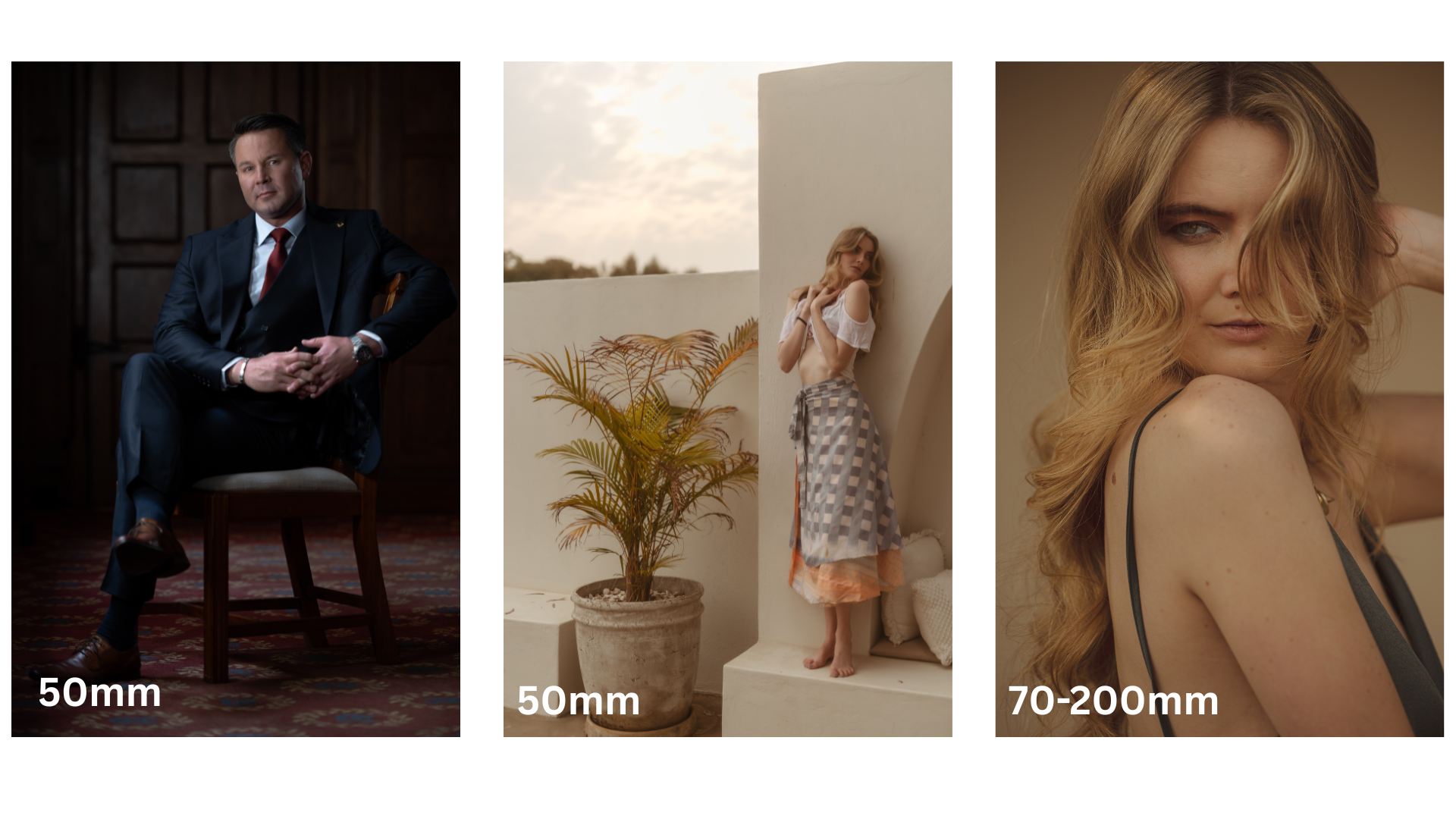
Examples of different scenes with focal length
In portrait photography, it’s easy to assume that the camera or the edit is what defines the final image. In reality, one of the most influential decisions happens much earlier, quietly, before the first frame is taken. The lens being used shapes not only how a portrait looks, but how the person being photographed feels throughout the experience.
In a place like Cape Town, where light, location, and environment play such a strong role in visual storytelling, lens choice becomes even more significant. Portraits here are rarely created in controlled studio conditions alone. They’re often shaped by natural light, open spaces, movement, and atmosphere. The lens becomes the bridge between the subject and the environment, determining how those elements come together in a single frame.
At its core, portrait photography is about presence. The right lens supports that presence without drawing attention to itself.
How Lens Choice Influences a Portrait
Every lens changes perspective. Some bring the viewer closer, others create distance. Some include context, while others isolate the subject. These differences are subtle, but they have a direct impact on how natural, flattering, or cinematic a portrait feels.
From a client’s point of view, this isn’t about technical specifications. It’s about comfort, confidence, and trust. When the lens suits both the subject and the setting, the camera fades into the background and the portrait begins to feel effortless.
This is why experienced portrait photographers are intentional about their lenses. Not because of trends or gear lists, but because they understand how perspective affects expression and energy.
A Natural, Flexible Approach to Portraits
Much of modern portrait photography relies on lenses that allow a shoot to unfold organically. A versatile focal range, such as a 24–70mm, supports this way of working by adapting to moments as they happen rather than forcing the subject to adapt to the equipment.
This flexibility is particularly valuable in Cape Town, where a single shoot can move between locations, textures, and lighting conditions. The result is a session that feels fluid rather than technical, allowing space for natural movement and genuine expression.
A 50mm lens offers a slightly different experience. Its perspective feels balanced and familiar, producing portraits that feel honest and timeless. Images created at this focal length often feel quietly confident, avoiding exaggeration while still offering enough separation to keep the focus where it belongs.
The Cinematic Presence of Longer Lenses
Longer focal lengths, particularly in the 70–200mm range, bring a sense of refinement to portrait photography. The compression created by these lenses subtly flatters facial features while allowing backgrounds to soften and fall away.
What often goes unnoticed is how this affects the subject. The physical distance created by a longer lens gives people room to breathe. The camera doesn’t feel intrusive, which often leads to more relaxed posture and more natural expressions. The resulting portraits tend to feel composed without being stiff, cinematic without feeling forced.
This balance is one of the reasons longer lenses are often associated with high-end portrait and fashion work. They support a calm, confident presence both in front of and behind the camera.
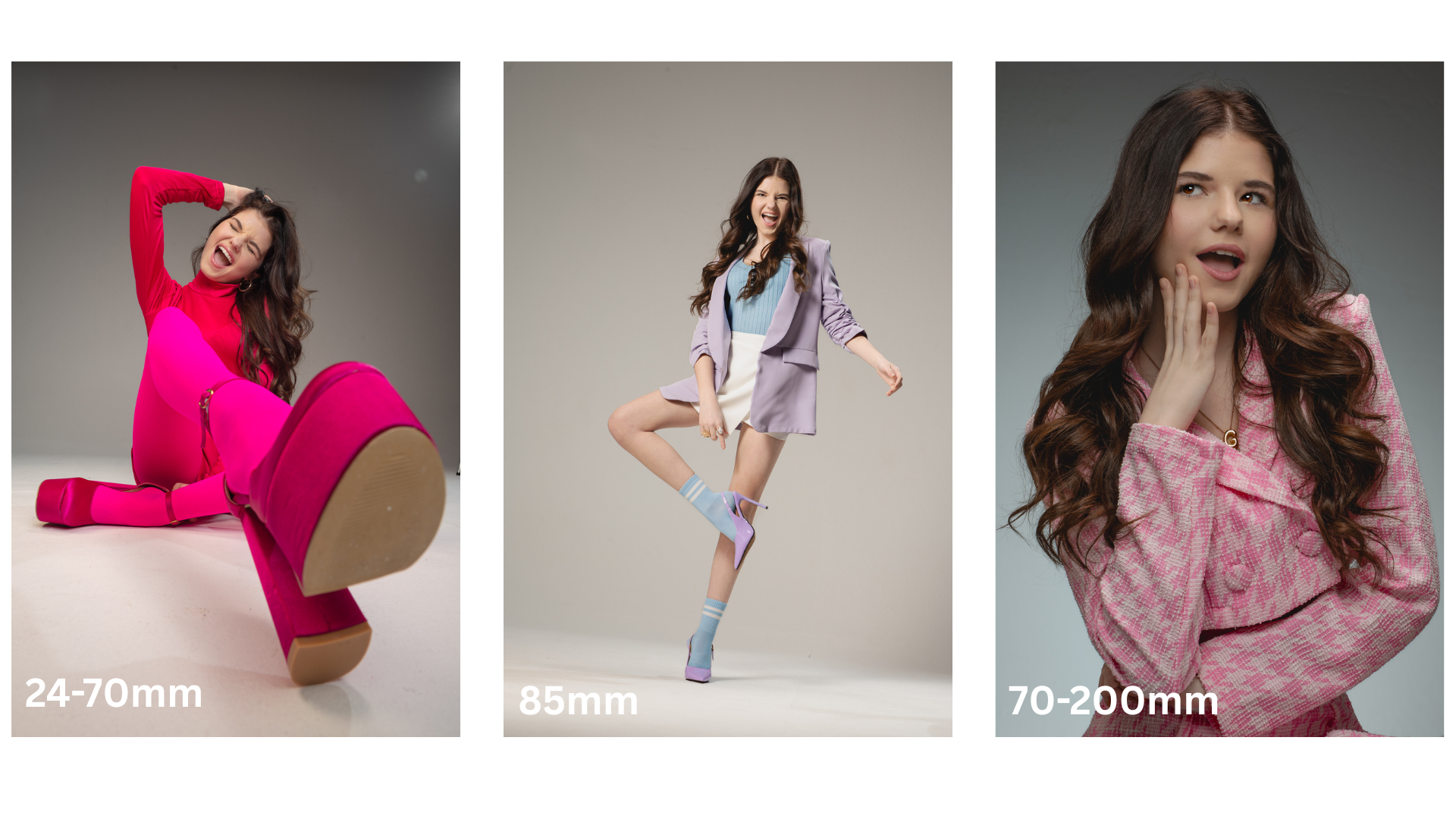
Examples of studio scenes with different focal length
When Environment or Tradition Takes the Lead
There are moments when the setting is part of the story. Wider focal lengths, such as 35mm, allow more of the environment to enter the frame, grounding the subject within a place. This approach works well for lifestyle and editorial portraits, where context adds meaning rather than distraction.
At the other end of the spectrum, classic portrait lenses like the 85mm are chosen for their simplicity. They draw attention directly to the subject, offering a clean and elegant aesthetic that has stood the test of time. These lenses are often favoured when the goal is refinement and clarity without unnecessary elements competing for attention.
Why Familiarity With One Lens Shapes a Photographer’s Style
One of the defining traits of a strong photographic style is consistency. When a photographer works regularly with the same lens or a small, intentional selection of lenses, a visual language begins to form. Perspective becomes instinctive, compositions feel deliberate, and the work develops cohesion over time.
For clients, this matters more than it might seem. Familiarity with equipment allows the photographer to focus fully on the person in front of the camera rather than the mechanics of the shoot. Sessions feel calmer, decisions feel assured, and the final images carry a sense of confidence that comes from experience rather than experimentation.
In a visually saturated city like Cape Town, this consistency is often what makes work recognisable and trusted.
Portrait Photography in Cape Town
Cape Town offers an extraordinary range of visual environments, often within minutes of each other. Natural landscapes, urban spaces, and shifting light conditions create both opportunity and challenge. Lens choice plays a key role in navigating this variety without compromising the integrity of the portrait.
Understanding how different lenses behave in these conditions allows a photographer to adapt intuitively, maintaining a consistent aesthetic while responding to the environment. This local understanding is part of what shapes portraits that feel grounded, intentional, and true to place.
Final Thoughts
Choosing the right lens for portrait photography isn’t about technical superiority. It’s about creating the conditions for connection. When a photographer knows their tools deeply, the process becomes quieter and more focused. The subject feels at ease, the session flows naturally, and the resulting images feel considered rather than constructed.
The strongest portraits are rarely about the equipment itself. They’re about how effortlessly that equipment allows a story to be told.